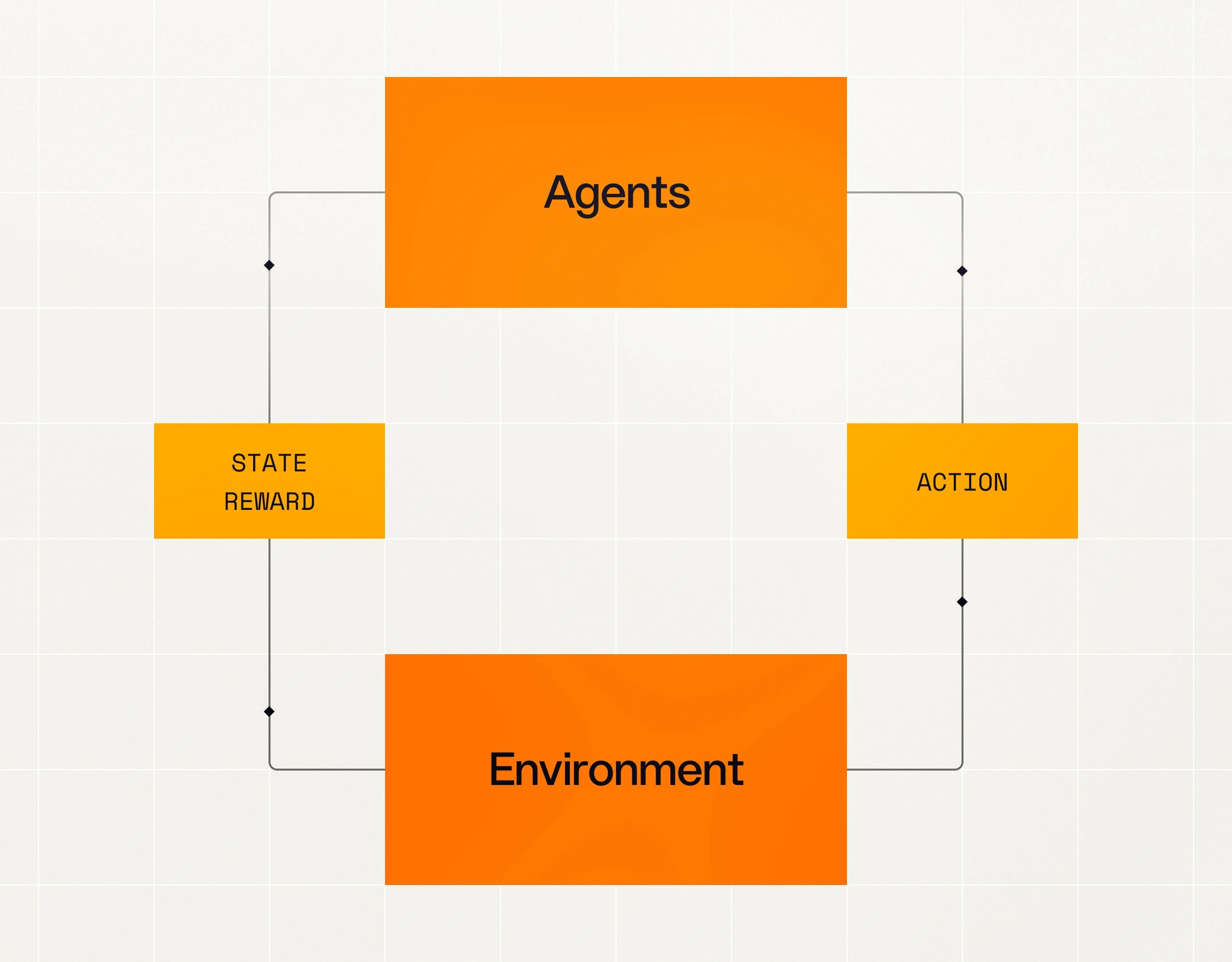
An August 27 collaboration between Thinking Machines and researchers associated with the University of Illinois Urbana-Champaign asks a concrete question about specialist AI: can domain expertise improve the model itself, instead of continually expanding the software around it? Their ReViSQL work uses reinforcement learning on verified SQL examples and more discriminating rewards. The reported result is promising, but the most valuable lesson is about what the model is rewarded for learning. The research announcement presents the methods and benchmark comparisons.
A correct result is not always a correct query
SQL translates a question into operations on a database. A query can accidentally return the expected result because the particular database does not expose its mistake. That makes a seemingly objective reward more fragile than it first appears. Rewarding a coincidental match can teach the model a shortcut rather than a reliable skill. The researchers target this issue alongside the quality of the labeled training examples.
The technical paper, first submitted in March and revised on August 21, describes reinforcement learning with verifiable rewards as the route to specialization. The accompanying August report says ReViSQL-K2.6 exceeded a 92.96% human benchmark reference when selecting from 16 samples, with a reported cost of $0.56 per task. Those qualifications matter: this is a benchmark result with sampling and selection, not evidence that every single generated query is human-level.
The valuable asset may be the definition of success
Many organizations own examples of completed work. Fewer have recorded why an answer was accepted, which exceptions were considered, or how experts resolved ambiguous requests. A training team that treats these as equivalent assets may be disappointed. Completed outputs provide examples to imitate. A dependable reward requires a sharper account of what makes those outputs correct.
Our reading is that this work points toward a defensible form of specialization: convert domain judgment into tests the learner cannot satisfy accidentally. In a commercial setting, that could mean checking whether a calculation remains correct when relevant inputs change, rather than only matching one historical result. This is an analytical implication of the research, not a claim that the study demonstrates transfer to every professional domain.
Training and workflow design are separate levers
Adding prompts, retries, and intermediate stages can improve a system without changing model weights. Post-training tries to move some useful behavior into the model. Neither approach eliminates the need for the other. A trained SQL model still needs access controls, a valid database schema, and an appropriate execution environment. Those surrounding requirements should not be mistaken for evidence against specialization.
The decision for a model builder is where repeated effort accumulates. If a model repeatedly makes the same semantic error, another repair prompt may handle the immediate case while leaving the underlying behavior unchanged. A well-designed training signal could address the recurring pattern. Conversely, if the problem is missing context, further weight updates may be the wrong remedy. The organization needs an error taxonomy before it needs a bigger training job.
Human expertise has a measurable production role
The researchers report a substantial error rate in their audit of existing training labels. That observation is specific to the audited data, but it challenges a familiar planning assumption: more examples are not automatically better supervision. A company budgeting for specialization should separate the cost of gathering records from the cost of verifying the meaning of those records.
An illustrative evaluation would compare three interventions at a fixed budget: additional unreviewed examples, expert correction of a smaller subset, and a better reward on the existing verified set. It should then test the resulting models on unseen schemas and questions, with experts reviewing consequential failures. Such a comparison would reveal whether the bottleneck is data volume, labeling quality, or the objective itself. Without it, an apparently successful fine-tuning run can remain a costly guess about what helped.
The evidence to watch
The next useful evidence is transfer to unfamiliar enterprise schemas, with training and expert-review costs included. Report one-sample and multi-sample results separately, and inspect queries that pass execution checks for semantic mistakes.
Questions, news tips or corrections? Contact [email protected].